

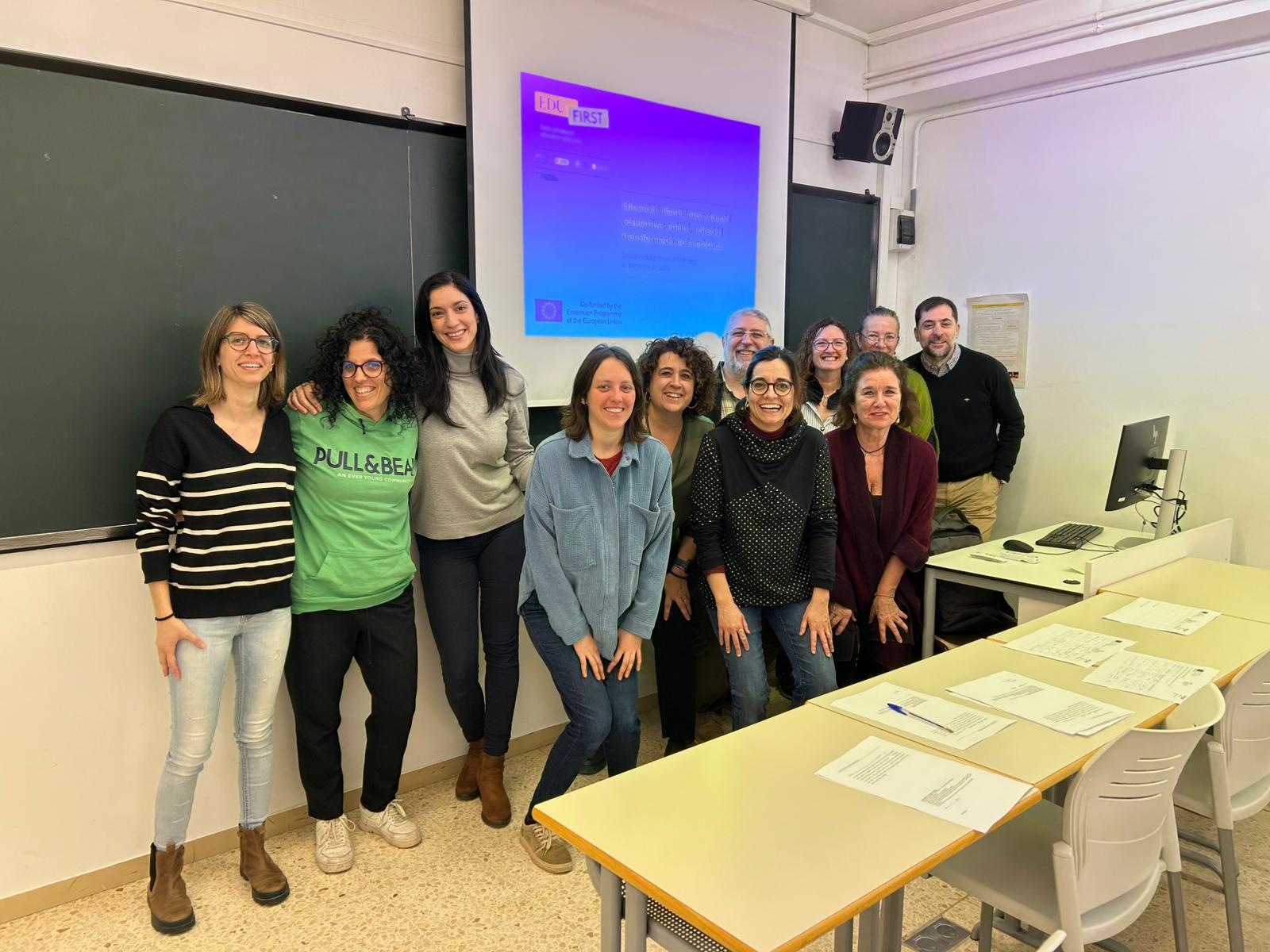
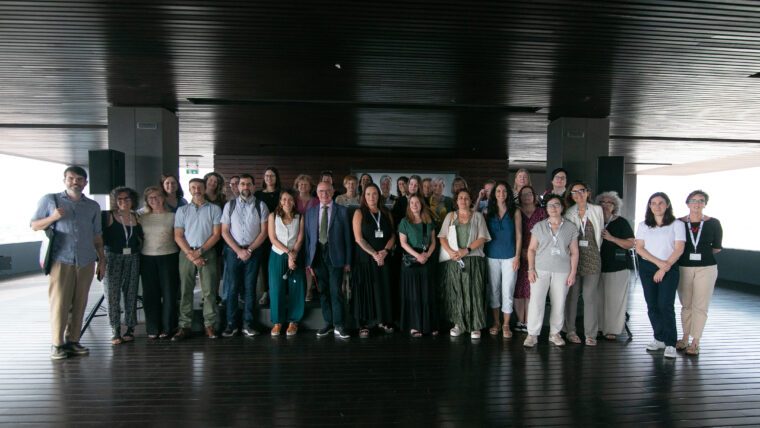
On 17 February, the first session of the training course that is part of the Erasmus+ EDUFIRST project took place at the University of Vic. Similar training sessions are being conducted simultaneously in Milan, Tampere and Barcelona.
The session brought together twelve participants, mostly lecturers and researchers from the university specializing in the field of education, and was led by Professor Jordi Collet, who presented the project and its objectives of contributing to the improvement and transformation of early childhood education services. Several of the main challenges facing these services were addressed. First, the paradox between the widespread recognition of the importance of ensuring high-quality education in early childhood and the insufficient public investment allocated to this stage. Second, the lack of coordination and cohesion between the policies and institutions involved. Finally, the difficulties in accessing public nursery schools in Catalonia, which often follow a model that does not always adapt to the diverse needs of families.
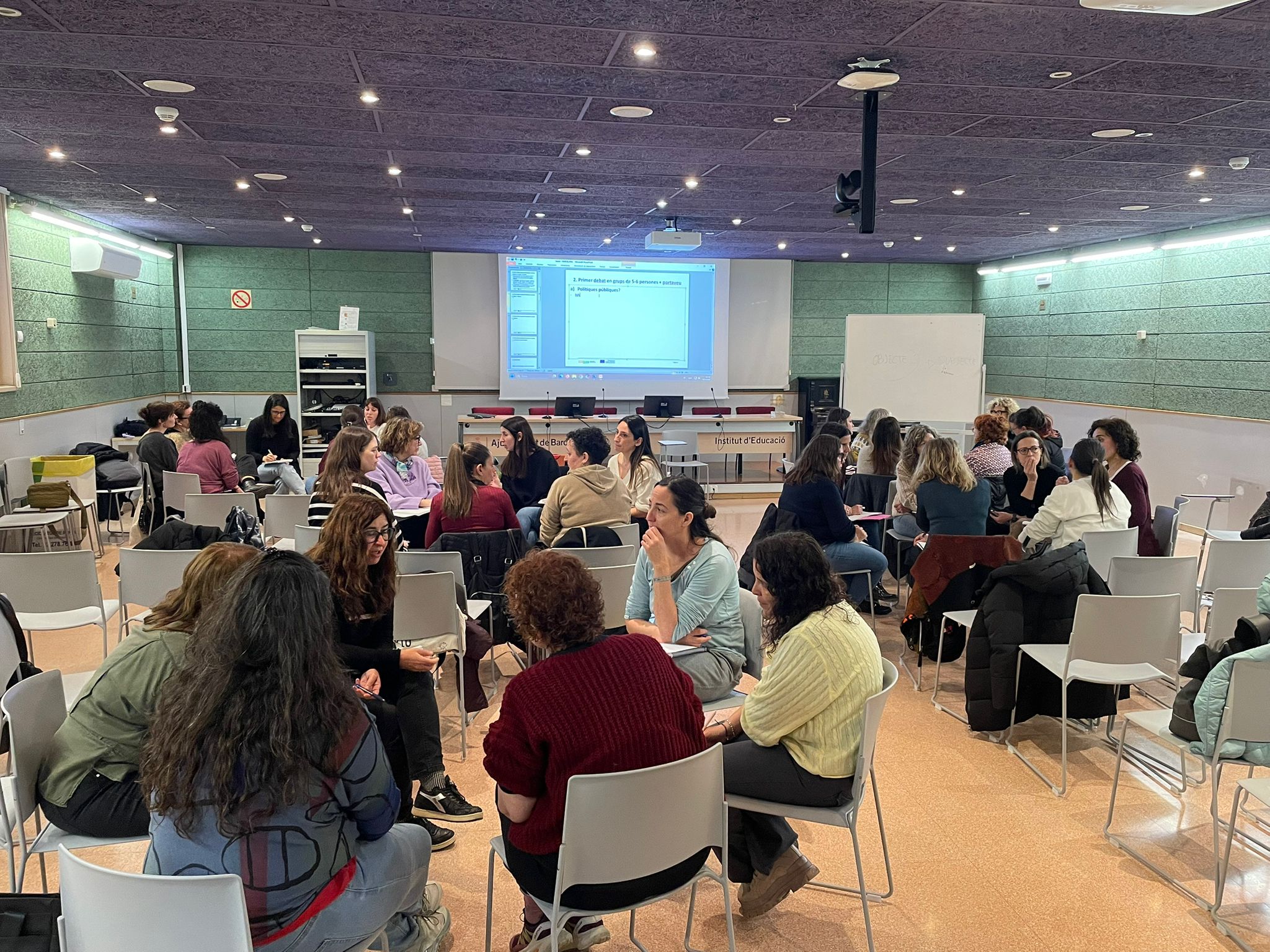
The session began with the screening of a fragment from the documentary Començar de zero from the programme 30 Minuts, which opened a debate with a wide range of perspectives around several guiding questions.
Regarding the limited attention that public policies devote to this key stage, participants’ responses opened a critical reflection on the role that our country assigns to schools. In this sense, it was pointed out that childhood is often perceived more as an economic expense than as a strategic social investment. Participants also highlighted the sense of abandonment experienced by many families—especially mothers in vulnerable situations—by the system, situating Spain as somewhat of an anomaly within the European context.
Concerning the adequacy of existing institutions to respond to the needs of children and families, participants defended the role of nursery schools as a basic infrastructure to support parenting and work–family balance, provided that they are combined with other informal spaces such as community networks, family spaces and similar initiatives. The inclusive function of family spaces was also emphasized, as they can reduce cultural and linguistic barriers and facilitate the participation of diverse families. However, it was noted that some families still find it difficult to understand this model due to cultural reasons or lack of information. The discussion also highlighted inequalities in educational expectations between middle- and upper-middle-class families and those in more disadvantaged situations.
Regarding the adequacy of care and educational practices in the current context, the experience and expertise of several educational centres in Vic in responding to student diversity were highlighted. At the same time, the discussion addressed the issue of school avoidance in the city, where some families with greater resources tend to choose certain schools through the pre-enrolment process. Participants also discussed the risks of the “schoolification” of early childhood, as well as the limits of some universal policies that prioritize formal equality over real equity.
The debate continued with the identification of good educational practices and inspiring initiatives currently being implemented, such as the free provision of the I2 level, the opening of extracurricular activities to the wider community, and the understanding of Vic’s nursery schools as part of a city-wide educational project. The universal and free Finnish model was also discussed as an example, including experiences in which some centres adapt their schedules to better respond to family needs.
The session concluded with the assignment of several individual tasks to be completed online by participants, including the reading of chapters from the upcoming EDUFIRST book. Finally, the date for the closing session of the course was agreed upon. This session will be based on the Design Thinking methodology and will aim to develop a prototype for the responsive transformation of early childhood education services.

Deixeu un comentari